







CNC Machining Materials

Acrylic

At a glance

Processes

CNC Mill
CNC Lathe

Lead Time

As fast as 3 days

Colors

Optically clear, opaque

Tolerance

With drawing: as low as +/- 0.005 mm
No drawing: ISO 2768 medium

Price

$

Applications

tanks, panels, and optical applications

About the Material

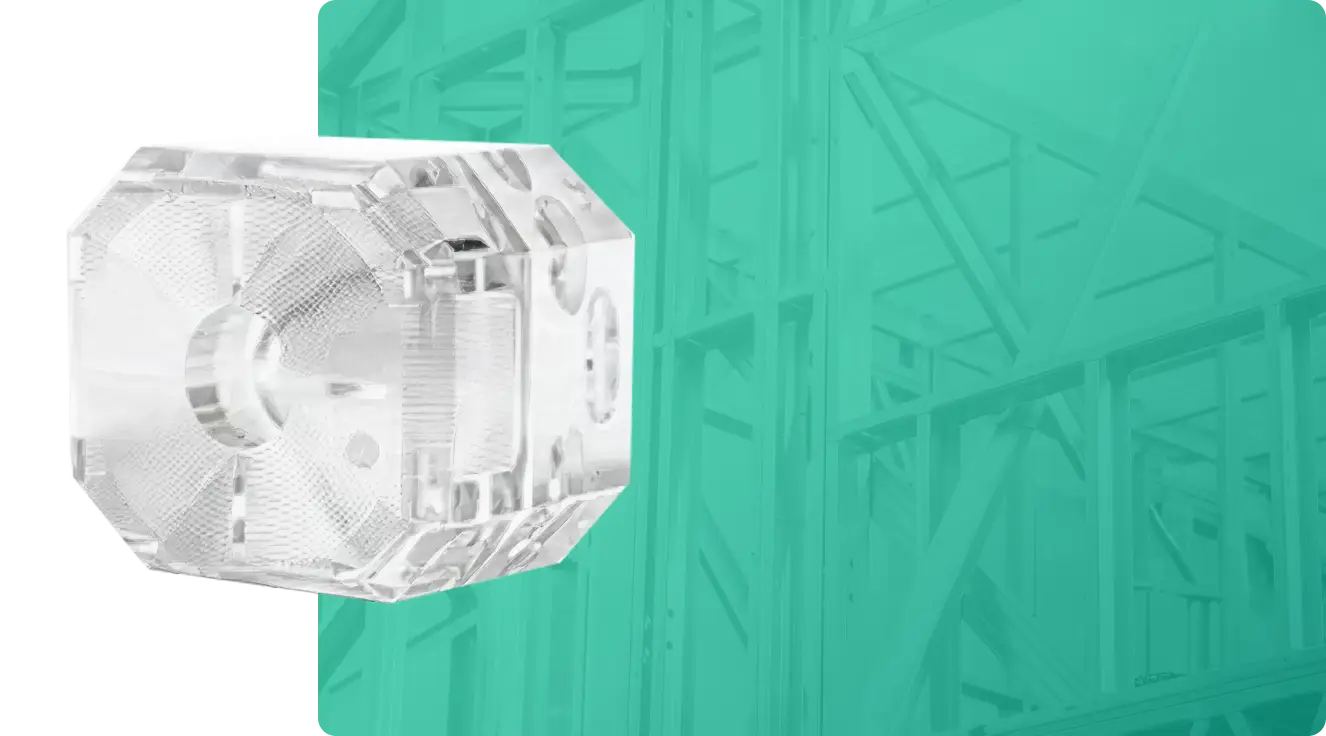
Acrylic is a scratch-resistant plastic, available optically clear or opaque. It is often used for tanks, panels, and optical applications.  It can be somewhat brittle in thin walled areas, so it is not recommended for delicate or complex geometries.

This plastic is also known as PMMA, an abbreviation of its full chemical name, polymethyl methacrylate, as well as by the trade names Plexiglas and Lucite.

Material Properties

Tensile Strength

8,000 PSI

Elongation at Break

6%

Hardness

Rockwell M95

Density

1.19 g/㎤
0.043 lbs / cu. in.

Maximum Temp

170° F

McMaster Part Number

8560K274

Material Finish

Acrylic is transparent or opaque (black, white, and a variety of colors) in its unfinished state.  Clear acrylic will take on more of a frosted translucent appearance when machined, though can be smoothed again to an optically clear state using various finishing methods.

Design Recommendations

Min Wall Thickness

0.5 mm

Min End Mill Size

0.8 mm (0.03 in)

Min Drill Size

0.5 mm (0.02 in)

Max Part Size

1200 x 500 x 152 mm[(x,y,z] (mill) 152 x 394 mm [d,h] (lathe)

Undercuts

Square profile, full radius, dovetail profiles

Radii : Depth

Depth must not exceed 12x drill bit diameter.
For end mills, depth must not exceed 10x drill bit diameter.

Cost Saving Tip

To reduce costs, limit the number of part setups, the number of inspection dimensions or tight tolerances, and deep pockets with small radii.

Acrylic FAQs

YOU MIGHT ALSO BE INTERESTED IN

AI in Digital Manufacturing: How Artificial Intelligence Improves Production Efficiency and Quality

In manufacturing, artificial intelligence is a catalyst tool that enables workers to accomplish higher-value tasks with greater accuracy, fewer errors, and fewer accidents. Instead of a dystopian nightmare, AI and digital manufacturing can be a huge advantage to a factory’s workforce. Even though artificial intelligence sometimes gets a bad rap for being overhyped, it is […]

Learn More

How On-Demand CNC Manufacturing Accelerates New Product Introduction (NPI)

As manufacturers across the U.S. and Canada bring production closer to home, the fastest teams are winning launch windows. Compressing the “design → make → test” cycle isn’t just about efficiency—it’s now a core competitive advantage. On-demand CNC machining, by intelligently routing precision parts to pre-vetted suppliers across regions, enables faster prototyping and pilot production […]

Learn More